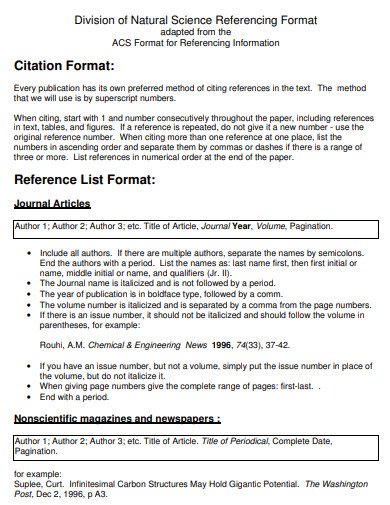
Crafting the perfect reference list in scientific writing can feel less like scholarship and more like an arcane art form. Specifically, mastering Manual ACS Referencing Techniques is a crucial skill for anyone in the chemical sciences, ensuring your hard-earned research is presented with unimpeachable academic rigor and clarity. It's about more than just avoiding plagiarism; it's about building a robust chain of knowledge that empowers your readers to trace the intellectual journey of your work.
Forget those clunky, jargon-filled guides that leave you more confused than when you started. This comprehensive article is designed to be your trusted companion, demystifying the ACS (American Chemical Society) citation style, based on the authoritative 2020 edition of the ACS Guide to Scholarly Communication. We'll walk through the nuances of in-text citations and reference list entries, ensuring your scientific prose shines with precision and professionalism.
At a Glance: Your Quick Takeaways
- In-Text Citations: Primarily use superscript numbers, matching your reference list order.
- Reference List Order: Follows the order of first appearance in your text, not alphabetical.
- Essential Elements: Each reference needs author(s), title, journal/book/website name, year, and specific location data (volume, page, DOI, URL).
- Database Distinction: Note aggregator databases in references; omit publisher databases.
- Online Sources: Always include an "accessed" date for URLs.
- Accuracy is Key: Meticulously check every detail against the original source.
Why Every Citation Counts: The Bedrock of Scientific Integrity
In the scientific community, acknowledging sources isn't just a formality; it's a fundamental pillar of ethical scholarship and effective communication. Every time you draw upon existing knowledge—be it an argument, a reported finding, a specific methodology, or even a nuanced idea—you are required to cite it. This holds true regardless of the source's format, whether it's a peer-reviewed journal, a textbook, a website, or a personal communication.
Why this insistence on proper citation? Because citations:
- Establish Context: They set the stage for your own research, demonstrating how your work builds upon or challenges previous findings.
- Support Your Claims: They provide evidence for your arguments, lending credibility and strength to your assertions.
- Offer Contrasting Views: They allow you to present opposing viewpoints fairly, deepening the analytical rigor of your discussion.
- Create a Knowledge Trail: Crucially, they act as intellectual breadcrumbs, linking your in-text discussions directly to a detailed reference list, which then guides your reader to the original source. This transparency is vital for reproducibility and verification, cornerstones of scientific progress.
Think of it as the ultimate collaborative network: you're not just reporting facts, you're participating in an ongoing conversation with generations of scientists. And a good citation is your formal introduction.
Your Guide to In-Text ACS Citations: A Clear Link to Knowledge
The ACS style primarily uses a numerical system for its in-text citations, creating a clean, unobtrusive reading experience while maintaining rigorous traceability.
The Superscript Method (Most Common):
You'll typically use a raised number (superscript) at the end of a sentence or immediately after the specific piece of information you're citing. This number corresponds directly to the full citation entry in your "References" list at the end of your document.
- Example: "The reaction kinetics were observed to be first-order in hydrogen peroxide concentration.²"
Repeating References:
If you refer to the same source multiple times throughout your paper, you simply reuse the original superscript number assigned to that source. You do not assign it a new number each time. - Example: "The initial study identified the critical enzyme.² Further research expanded on these findings, confirming its role in metabolic pathways.²"
Alternative In-Text Options:
While superscripts are the preferred method, the 2020 ACS Guide (section 4.3.2) acknowledges two other options, though they are less common in most chemistry journals:
- Parenthetical Referencing:
(1) - Author–Date Referencing:
(Smith, 2019)
Unless specifically instructed otherwise by your instructor or journal guidelines, stick with the superscript method for consistency and adherence to standard ACS practice.
Deciphering Key Terms for Accurate Manual Referencing
Before we dive into specific formats, let's clarify some terms that often cause confusion when you're manually building your reference list. Understanding these definitions will save you headaches and ensure your citations are robust.
- DOI (Digital Object Identifier): Imagine a permanent, unique barcode for an online academic work. That's a DOI. It's a persistent link that will always direct you to that specific resource, even if the URL changes. Actionable Insight: Always prioritize including a DOI if available, as it's the most reliable way to link to online content.
- URL (Uniform Resource Locator): This is the typical web address you see in your browser. While some URLs are stable ("permanent URLs"), many can change over time, leading to broken links. Actionable Insight: If no DOI is available, use a URL. Always include the date you "accessed" the URL, as content can be updated or removed.
- Aggregator Databases: These are vast repositories, often accessed through your library, that collect articles and e-books from many different publishers (e.g., Web of Science, PsycINFO, Academic Search Complete, Google Scholar, ProQuest eBook Central). The material isn't uniquely hosted by the database itself; it's aggregated. Actionable Insight: When you retrieve an article or e-book from an aggregator database, you must note this in your ACS reference. This clarifies where you found the content if a direct publisher link isn't available.
- Publisher Databases: These are the official websites where journals and books are published by their respective publishers (e.g., ScienceDirect, Cambridge Core, ACS Publications). The full text is uniquely located and hosted directly by the publisher. Actionable Insight: If you retrieve an article or e-book directly from a publisher database, you do not need to include the database name in your ACS reference. The DOI or the journal/book information is sufficient.
- Article Number: Many online-only journal articles, especially newer ones, don't use traditional page numbers. Instead, they're assigned an "article number" (sometimes called an e-locator). Actionable Insight: Use the article number in place of page numbers for these types of articles.
Building Your "References" List: The Foundational Rules
Your "References" list is where all the detail lives, connecting your in-text numbers to the full bibliographic information. Here are the general rules to ensure it's impeccably formatted:
- Every Citation, One Entry: Each source you cited in your text (using those superscript numbers) must have a corresponding entry in your "References" list. No exceptions.
- Order of Appearance: The entries in your reference list are numbered and ordered sequentially based on their first appearance in your paper. If you cite source #3 in your introduction, its entry will be third in the list, even if you cite source #15 later in the introduction.
- Consistent Formatting: Each citation begins with its number, followed by a period and a space (
1.). - Heading: The heading "References" should be left-justified and bolded at the top of your list.
- Title Capitalization: For article and chapter titles, capitalize the first word and all major words. Prepositions, conjunctions, and articles (e.g., "and," "or," "the," "of," "in," "for") are typically lower-cased unless they are the first word of the title or subtitle.
- Author Listing: List all authors in the order they appear in the original source, using initials for first and middle names, and separating authors with a semicolon (
;). For journal articles, the ACS style uses inverted names for all authors (e.g., "Doe, J. A.; Smith, B. C."). For books and book chapters, typically only the first author is inverted, with subsequent authors listed as "B. C. Smith." However, the 2020 guide (section 4.3.2) for the most basic format shows all authors as inverted with initials first, so we'll stick to that for consistency in templates. - Flush Left Alignment: All subsequent lines within a single reference entry should remain flush with the left-hand margin. Do not indent them. (This differs from some other styles like MLA or APA, so pay close attention!)
Manual ACS Reference Formats: Your Practical Toolkit
Now, let's get down to the brass tacks: specific templates and examples for the most common source types you'll encounter. Remember to consult the full ACS Guide to Scholarly Communication or a subject librarian for highly specialized or unusual source types.
1. Journal Articles
This is perhaps the most frequent type of source in chemistry. Pay attention to journal abbreviations, which are standardized.
- Template:
Number. Author, A. A.; Author, B. B.; Author, C. C. Title of Article. *Journal Abbreviation* **Year**, *Volume*(Issue Number), Page numbers or Article number. DOI (if available). - Example:
1. Smith, J. R.; Jones, E. K. Advanced Synthesis of Chiral Amines. *J. Org. Chem.* **2019**, *84*(15), 9450–9462. DOI: 10.1021/acs.joc.9b01234 - Example (Online with Article Number):
2. Williams, P. T.; Lee, C. D. Mechanistic Insights into Catalyst Deactivation. *ACS Catal.* **2021**, *11*(3), Article 2025–2038. DOI: 10.1021/acscatal.0c05315 - Note: If retrieved from an aggregator database and no DOI, add
(accessed Database Name)at the end. E.g.,...DOI (accessed SciFinder).
2. Books with Primary Author(s)
For entire books written by specific authors.
- Template:
Number. Author, A. A.; Author, B. B. *Book Title*, Edition; Publisher: Place of Publication, Year. - Example:
3. McMurry, J. E.; Fay, R. C.; Robinson, J. *Chemistry*, 8th ed.; Pearson: Boston, MA, 2020.
3. Authored Chapters in Books with Editor(s)
When you're citing a specific chapter within a larger edited volume. Note the distinction between chapter authors and book editors.
- Template:
Number. Chapter Author, A. A.; Chapter Author, B. B. Chapter Title. In *Book Title*; Book Editor, A. A., Book Editor, B. B., Eds.; Series Title, Volume number; Publisher: Place of Publication, Year; pp Page numbers. - Example:
4. Miller, S. T.; Green, L. P. Applications of NMR Spectroscopy. In *Spectroscopic Methods in Organic Chemistry*; Evans, J. P., Ed.; Wiley: New York, 2018; pp 115–145.
4. Books with Editor(s), Entire Book Referenced
If you're citing the entire edited volume itself, rather than a specific chapter.
- Template:
Number. *Book Title*; Editor, A. A., Editor, B. B., Eds.; Series Information; Publisher: Place of Publication, Year. - Example:
5. *Inorganic Chemistry: A Modern Perspective*; Jensen, K. L., Ed.; RSC Publishing: Cambridge, U.K., 2019.
5. Encyclopedia or Handbook Articles (Print)
For print versions of these multi-volume reference works.
- Template:
Number. Article Title. In *Encyclopedia Name*, Edition number; Publisher: Place of Publication, Year; Volume Number, Page numbers. - Example:
6. Carbon. In *Kirk-Othmer Encyclopedia of Chemical Technology*, 4th ed.; Wiley: New York, 1993; Vol. 4, pp 556–604.
6. Online Encyclopedias, Handbooks and Dictionaries
For digital versions, the access date and DOI/URL are crucial.
- Template:
Number. Article Title. In *Encyclopedia or Handbook or Dictionary Title*, edition; Publisher, Posted Online Posting Date. DOI or URL (accessed YYYY-MM-DD). Other identifiers. - Example:
7. Isocyanates. In *Ullmann’s Encyclopedia of Industrial Chemistry*, 6th ed.; Wiley-VCH, 2005. DOI: 10.1002/14356007.a14_615.pub2 (accessed 2023-10-26).
7. Newspapers and Magazines
For articles from general news publications.
- Template:
Number. Author, A. A. Article Title. *Newspaper/Magazine Title*, Complete Date, Page numbers. - Example:
8. Chang, K. Fusing Elements: An Ode to the Alchemists. *The New York Times*, October 24, 2023, pp B1.
8. Websites
Citing websites requires careful attention to authorship, dates, and stable URLs. Prioritize official organizational websites over personal blogs for academic work.
- Template:
Number. Author, A. A. Title of webpage. Title of website, Date of Publication/Last Updated. URL (accessed YYYY-MM-DD). Other identifying information. - Example:
9. American Chemical Society. What Is Chemistry? American Chemical Society, October 15, 2022. https://www.acs.org/content/acs/en/education/whatischemistry.html (accessed 2023-10-26). - Example (No specific author):
10. National Institute of Standards and Technology. NIST Chemistry WebBook, SRD 69. NIST, 2023. https://webbook.nist.gov/chemistry/ (accessed 2023-10-26).
Remember, consistency is paramount. Once you understand these core formats, applying them manually becomes a matter of diligent data entry. For those moments when you need a quick double-check or simply want to streamline the process, an automated tool can be a lifesaver. You can even Generate ACS citations using specialized online resources, but always cross-reference them with your source and the official guide.
Common Manual Referencing Questions & Troubleshooting
Even with clear guidelines, specific scenarios can throw a wrench in your manual referencing efforts. Here are some frequently asked questions and how to tackle them:
- "What if there's no DOI for an online journal article?"
If a DOI isn't available, provide the full URL (the persistent one, if possible) and always include the(accessed YYYY-MM-DD)date. Also, check if it was retrieved from an aggregator database and note that. - "How do I handle more than 10 authors?"
The 2020 ACS Guide (section 4.3.2) states to list all authors. While older editions might have truncated lists with "et al.", the current recommendation for the reference list is to include all authors in the order they appear. - "The journal name isn't abbreviated in my source. How do I find the correct abbreviation?"
Use standard journal abbreviation lists, such as those found on the ACS Publications website or CAS Source Index (CASSI) Search Tool. Consistency is key here; don't invent abbreviations. - "What if a book has no edition number?"
If no edition number is specified, assume it's the first edition and omit the edition information from your reference. - "The website doesn't have a clear publication or update date. What do I do?"
If you cannot find a specific publication or last updated date, use "n.d." (no date) in its place, but the accessed date remains critical. Also, consider the credibility of a source lacking this information. - "How do I cite a patent?"
Patents follow a specific format:Number. Patent Holder. Title of Patent. Patent Number, Date.
Example:11. Smith, J. M. Method for Preparing Polyurethanes. U.S. Patent 4,374,210, Feb 15, 1983. - "What about data sets or software?"
The ACS Guide provides formats for these, typically including the author/creator, title, version, year, publisher/repository, and a DOI or URL. Due to their varied nature, always consult the guide's specific examples for these.
Best Practices for Flawless Manual ACS Referencing
Mastering manual ACS referencing isn't just about knowing the rules; it's about developing habits that ensure accuracy and consistency.
- Start Early, Stay Organized: Don't wait until the last minute to compile your references. As you research, immediately collect all necessary citation information for each source. Use a spreadsheet or a reference manager to keep track.
- Consult the Source, Not Just the Summary: Always refer back to the original document or webpage when creating your reference entry. Small discrepancies (e.g., author initials, page ranges, publication year) can creep in if you rely on database summaries.
- Cross-Reference Your In-Text and Reference List: After drafting your paper, meticulously go through each in-text superscript and verify that it matches the correct entry in your reference list, and that the entry itself is accurate.
- Embrace Consistency: Maintain a consistent style throughout your reference list. For example, if you decide to include issue numbers for journal articles (when not strictly required), do it for all of them.
- Proofread with a Fresh Eye: After you've spent hours on your paper, it's easy to overlook errors. Ask a peer to proofread your reference list specifically, or take a break before reviewing it yourself.
- Utilize Official Resources: The ACS Guide to Scholarly Communication (2020 edition) is your ultimate authority. When in doubt, always refer to it directly or consult a subject librarian.
Your Next Steps to ACS Citation Mastery
Manual ACS referencing might seem daunting at first, but with practice and a clear understanding of the principles, it becomes second nature. You've now got the templates and insights to confidently construct accurate and professional reference lists for your chemistry coursework and research.
Remember, every correctly formatted citation is a testament to your academic integrity and your commitment to the scientific conversation. Start applying these techniques in your next assignment, and you'll not only avoid common pitfalls but also elevate the quality of your scholarly communication. Keep these guidelines handy, practice diligently, and you'll soon find yourself citing with the precision of a seasoned chemist.